

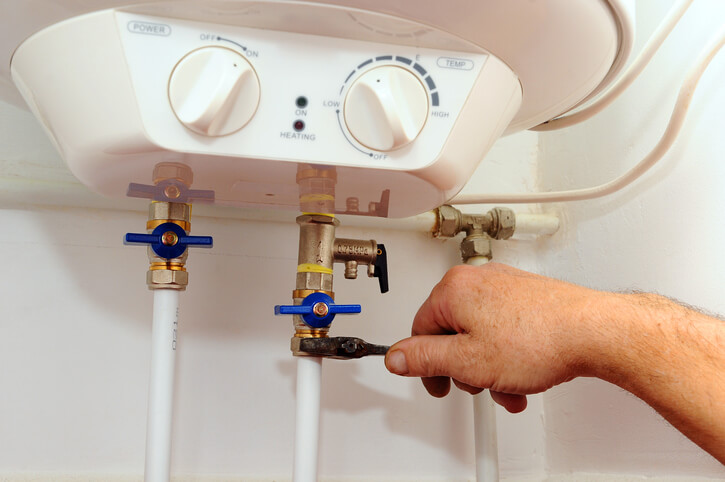
A water heater looks simple: a tank, two pipes, a gas line or a circuit. The code and the failure modes are what make replacement a licensed job in Texas.
Permits and code
Texas requires a permit for water heater replacement. The code covers venting, the pressure relief valve and its discharge line, gas connections, electrical connections, and the drain pan. Work without a permit can fail inspection and complicate an insurance claim later.
Gas and electrical risk
Improper venting can release carbon monoxide into the home. A gas connection that is not leak-tested can seep. Electric units run on a 240-volt circuit that has to be disconnected and reconnected correctly. None of these are forgiving of a mistake.
What a licensed install includes
A permitted installation covers removal and disposal, a venting check, a gas or electrical connection, pressure and leak testing, and a relief line routed to a safe discharge point. The installer also confirms the new unit fits the space and the home’s demand.
Where DIY still fits
Draining sediment and testing the relief valve are reasonable maintenance tasks. Replacing the unit is not, and the savings rarely cover a failed inspection or a venting correction.
Getting it done
Champion Plumbing Services replaces and repairs water heaters in Cypress and nearby northwest Houston. The water heater page covers tank and tankless options and what the installation includes.
Frequently Asked Questions
Do I need a permit to replace a water heater in Texas?
Texas requires a permit for water heater replacement, and work without a permit can fail inspection. That is one reason replacement is not a simple DIY task.
What does the plumbing code cover during water heater replacement?
The code covers venting, the pressure relief valve and its discharge line, gas connections, electrical connections, and the drain pan. A permitted installation has to meet those requirements.
What is involved in a permitted water heater installation?
A permitted installation covers removal and disposal, a venting check, a gas or electrical connection, pressure and leak testing, and a relief line routed to a safe discharge point. The installer also confirms the new unit fits the space and the home’s demand.
Why is improper venting dangerous?
Improper venting can release carbon monoxide into the home, which is a serious risk. A venting check is part of a permitted installation for that reason.
Why does an electric water heater need careful reconnection?
Electric units run on a 240-volt circuit that has to be disconnected and reconnected correctly. A mistake on that connection is not forgiving.
Can a homeowner drain the water heater for maintenance?
Draining sediment and testing the relief valve are reasonable maintenance tasks. Replacing the unit is a different job, since it involves the permit and code requirements.
What can go wrong if a water heater is installed without a permit?
Work without a permit can fail inspection and create complications later. A failed inspection can require venting or connection corrections before the installation is accepted.