

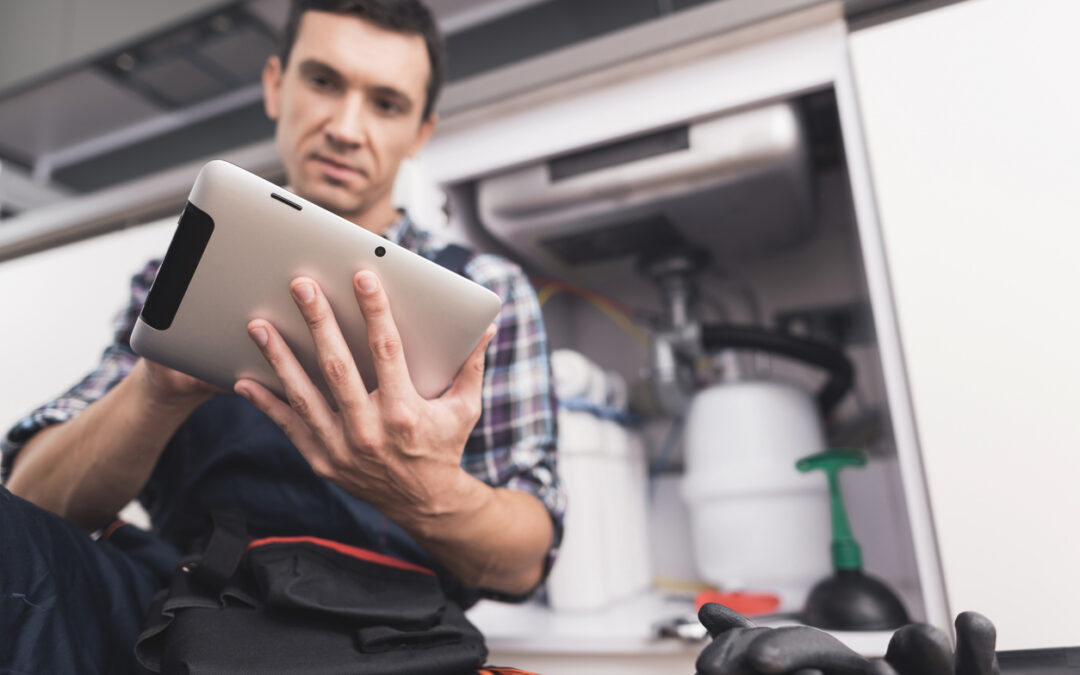
Smart plumbing is a small category with a practical core: devices that watch for leaks, shut off water, and report what the system is doing. The useful ones solve a specific problem.
Leak detectors
Battery or plug-in sensors sit near the water heater, under sinks, and behind the washing machine. They sound an alarm or send a notification when moisture reaches them. They detect a leak after it starts, which is still better than finding it a week later.
Automatic shutoff valves
A motorized valve on the main line closes when a sensor or flow monitor detects a problem. Some models learn normal water use and flag a burst pipe. Installation requires cutting into the main line, so it is a plumber’s job.
Smart faucets and fixtures
Motion and touchless faucets reduce contact and can limit run time. They are convenient, and they are not a water-saving strategy on their own.
Tankless and irrigation controls
Tankless units heat on demand, and smart irrigation controllers adjust watering to weather and soil moisture. Both save energy or water when they are sized and programmed correctly.
Water quality monitors
Inline monitors track temperature, pH, and sometimes contaminants. They are useful for homes on well water or with treatment systems, as long as the readings are treated as a prompt to test rather than a lab result.
What to install first
Start with a shutoff valve and two or three leak sensors in the rooms where water damage is most expensive. Champion Plumbing Services installs and services these systems in Cypress and nearby northwest Houston, along with the water heaters they protect.
Frequently Asked Questions
What do smart plumbing devices do?
Smart plumbing devices watch for leaks, shut off water, and report what the system is doing. The useful ones focus on a specific problem.
Where should leak detectors be placed?
Battery or plug-in sensors sit near the water heater, under sinks, and behind the washing machine. They sound an alarm or send a notification when moisture reaches them.
How do automatic shutoff valves work?
A motorized valve on the main line closes when a sensor or flow monitor detects a problem, and some models learn normal water use and flag a burst pipe. Installation requires cutting into the main line, so it is a plumber’s job.
Do smart faucets save water?
Motion and touchless faucets reduce contact and can limit run time. They are convenient, but they are not a water-saving strategy on their own.
What do smart irrigation controllers do?
Smart irrigation controllers adjust watering to weather and soil moisture. They can save water when they are programmed correctly for the home.
What do water quality monitors track?
Inline monitors track temperature, pH, and sometimes contaminants. They are useful for homes on well water or with treatment systems, as long as the readings are treated as a prompt to test.
What should I install first in a smart plumbing setup?
Start with a shutoff valve and two or three leak sensors in the rooms where water damage would matter most. That combination covers the biggest risk before adding other devices.