
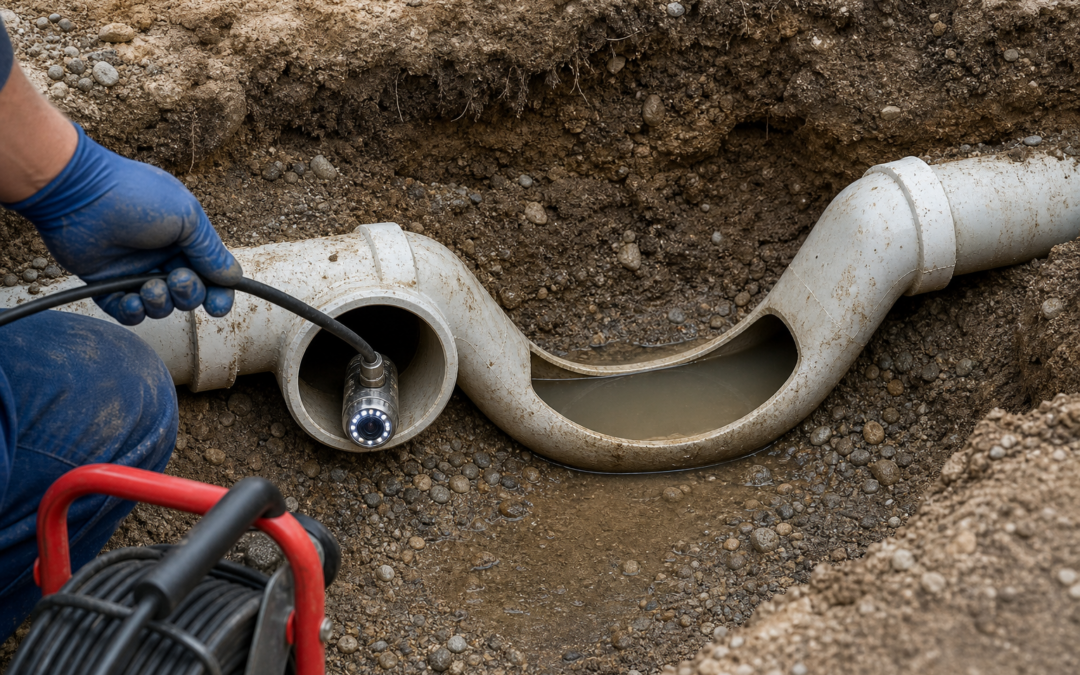
A sewer line belly is a low section of gravity piping where wastewater collects instead of continuing downhill toward the main sewer. It can often be repaired, but the right correction depends on how long and deep the sag is, where it sits, what caused the pipe to lose its grade, and whether the surrounding pipe is still sound. A focused repair may be possible when one accessible section is affected. A broader replacement may make more sense when the low area is extensive or appears with other defects.
The important distinction is that a belly is a physical slope problem, not simply material blocking the pipe. Cleaning may remove buildup and restore flow for a while, but it cannot lift a low pipe or rebuild the support beneath it.
Why a Low Spot Causes Trouble
A building sewer relies on gravity. The pipe needs a consistent path that allows wastewater and solids to move away from the home. When part of that path dips and rises again, water remains in the low section after normal flow passes.
That standing water reduces the open space available inside the pipe. Paper and waste can slow as they enter the pooled section, and solids may settle instead of continuing downstream. Over time, the belly may contribute to recurring clogs, slow drainage, gurgling fixtures, or backups.
Those symptoms do not prove that a belly is present. Roots, grease, an offset joint, damaged pipe, or another obstruction can create similar problems. The line must be inspected before the cause and repair scope are clear.
How a Sewer Line Develops a Belly
A low spot can form when the material supporting the pipe settles, washes out, or was not compacted evenly. Soil movement can also change the line’s position after installation. In other cases, a pipe may have been installed with an uneven grade or may deform as surrounding conditions change.
The cause matters because replacing pipe without correcting the support and grade can leave the same drainage problem behind. A plumber evaluating the line needs to consider the pipe itself and the conditions around it. The visible sag is the result; the repair plan should also address why that section cannot maintain the intended path.
No one can identify the cause from indoor symptoms alone. Pipe material, depth, route, joints, nearby roots, drainage patterns, and access all affect what can be confirmed at a Cypress property.
What a Sewer Camera Can Show
A professional sewer camera inspection provides direct evidence from inside the line. As the camera advances, the technician can watch for water covering more of the pipe, note where the camera enters the pooled section, and identify where the normal visible interior returns.
The recording can also reveal conditions near the low spot, including roots, separated or offset joints, cracks, deformation, buildup, or a change in pipe material. Distance readings and locating equipment can help relate the finding to a position on the property.
Standing water may obscure part of the pipe wall or cover the camera lens. If debris blocks the view, appropriate drain cleaning may be needed before the line can be evaluated clearly. Additional flow observations or locating work may also be appropriate. Cleaning in that situation supports the inspection; it does not correct the sag.
A camera finding should be interpreted in context. A shallow pocket that still passes normal flow is different from a long section that repeatedly fills and catches solids. The condition of the pipe before and after the belly also affects the recommendation.
Can the Sagged Section Be Repaired?
Yes, a sewer line belly can be repairable. One common approach is to expose the affected area, remove the low section, rebuild stable support at the proper grade, and install sound pipe between reliable connection points. Whether that is the appropriate method depends on the actual route, depth, access, and conditions found.
A repair does not always mean replacing the entire sewer line. If inspection evidence shows one defined low area and the neighboring pipe is in serviceable condition, the work may be limited to that section. The plumber still needs enough access to establish a consistent path and properly support the corrected line.
Trenchless rehabilitation can solve some sewer defects, but it should not be assumed to correct a significant belly. A liner generally follows the route of the existing host pipe, so correcting the pipe wall and correcting its grade are separate questions. The plumber should explain whether a proposed method will remove the low point or only address another defect.
When a Broader Replacement May Be Considered
A larger sewer line repair or replacement recommendation may be reasonable when the belly extends through a long section, more than one low spot is present, the pipe is deformed, or nearby joints and pipe walls are also failing. Repeated defects can make a series of isolated corrections less practical than replacing a continuous run.
The decision may also depend on:
- The start and end points of the sag.
- The depth and accessibility of the affected line.
- The condition and material of the adjoining pipe.
- Whether roots, offsets, cracks, or deformation appear nearby.
- Whether stable grade can be established between usable connection points.
- Whether the support beneath the line can be corrected.
- Property features that affect safe access to the route.
These factors require property-specific evidence. A camera recording is an important starting point, but the final recommendation may also require locating the line and assessing the repair area.
Why Repeated Clearing Is Not a Permanent Grade Repair
When a belly catches debris, clearing the blockage may make the fixtures drain normally again. That result can be useful, but the low section still holds water. If waste continues to settle there, the same symptoms can return.
Recurring service at the same location is a reason to ask what the inspection shows, not a reason to keep escalating do-it-yourself clearing attempts. Chemical drain products cannot correct the pipe’s slope and may add risk without revealing the underlying condition. Digging toward a sewer line without its exact route, depth, and nearby utilities is also unsafe.
The useful questions are whether the line has been viewed after cleaning, where the low section begins and ends, what defects appear around it, and whether the proposed work will correct both the pipe and its support.
What to Expect From an Evaluation
Before the visit, note which fixtures are affected, how often the problem returns, and whether previous cleaning produced only temporary relief. If you have an earlier camera recording or repair record, keep it available for comparison.
The technician may first determine whether the line needs cleaning for a clear inspection. During the camera run, the low section can be documented and located. The plumber can then explain whether the evidence supports a focused repair, more investigation, or replacement of a longer run.
Ask to see the relevant portion of the recording and how it relates to the property. A useful explanation should connect the visible condition to the recommended scope without promising what cannot be known until access is established.
Schedule a Sewer-Line Evaluation
If recurring sewer symptoms at your Cypress home may involve a low or sagged line, contact Champion Plumbing Services for an inspection and repair evaluation. The team can assess the affected line, explain what the camera evidence shows, and recommend a correction based on the pipe’s condition and location.