
Low water pressure is a symptom, not a diagnosis. One weak faucet, a shower that has lost its force, or a whole house that suddenly runs slow can each point to something different. Before replacing fixtures or buying a pump, it helps to know which part of the system is losing pressure and why.
Most pressure problems come down to one of three things: something restricting the flow, something failing to hold pressure, or the supply arriving weak in the first place. A pressure gauge separates those three, and the reading decides what actually needs to be done.
Where Home Water Pressure Is Lost
Water enters a home through the main line, passes through a pressure regulator, and then travels to every fixture in the house. Pressure can drop anywhere along that path. A clogged aerator or a failing cartridge affects one fixture. A regulator that has drifted out of adjustment, a partly closed valve, or a problem in the supply line affects the whole house at once.
Which fixtures are affected is the first useful clue. If the kitchen tap is weak but the showers are fine, the cause is almost certainly local to that fixture or branch. If every tap in the house runs slow, the cause sits upstream of the fixtures, where the water is shared.
What Counts as Normal Water Pressure
Most homes run comfortably somewhere in the middle of the residential range, with enough pressure to feed a shower and a running appliance at the same time. Pressure that reads noticeably low starves fixtures and makes everyday tasks take longer. Pressure that reads noticeably high pushes harder on supply lines, valve seals, and appliance connections than they were designed to take.
Both ends of the range cause damage, but they behave differently. Low pressure announces itself every time you turn on a tap. High pressure is quiet, and often shows up as a dripping relief valve, a failed supply hose, or a fixture that wears out earlier than expected.
What a Pressure Check Actually Shows
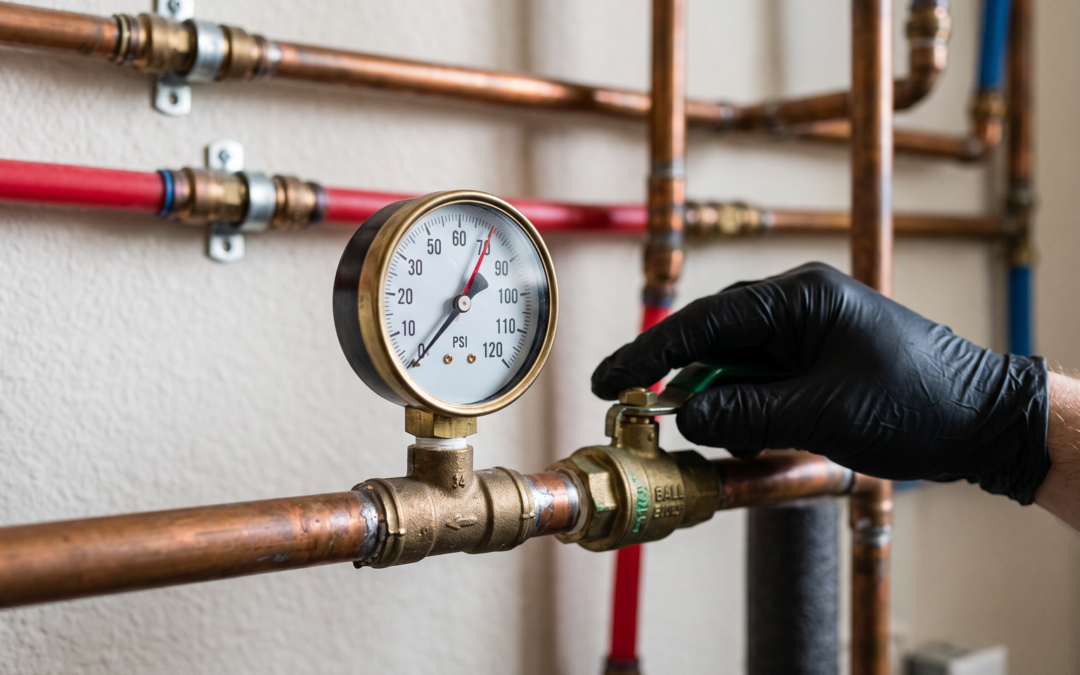
A gauge connected to an outdoor hose bib or a test port reads the pressure the home is receiving from the street. That single reading separates two very different situations. A steady reading in the normal range means the supply is healthy and the restriction is somewhere inside the plumbing. A reading that falls when a fixture runs points to a supply or restriction problem rather than the fixture itself.
The reading is a measurement, not a guess. It tells a technician whether the water arriving at the house is the problem, or whether the house is losing pressure after it arrives.
Why One Fixture and the Whole House Point in Different Directions
When only one fixture is weak, the cause usually sits at that fixture: a clogged aerator screen, a failing cartridge, a partly closed stop valve, or a supply line that has narrowed with mineral buildup. These are local repairs, and they rarely involve the water coming into the house.
When the whole house is weak, the cause is shared. That points to the incoming supply, the regulator, the main shutoff, or a restriction in the service line. Whole-house symptoms are the ones worth measuring before anything is replaced, because the same symptom can come from several different sources.
When a Booster Pump Helps
Some Cypress homes sit at the end of a long service line or on a street where delivery pressure runs low. When the incoming pressure is genuinely low and the plumbing itself is sound, a booster pump raises the pressure to a usable range and holds it steady through the house.
A booster pump does not fix a clogged line, a failing regulator, or a hidden leak. Those problems produce low pressure too, and adding a pump on top of them wastes money while leaving the real fault in place. The pressure reading comes first, and it decides whether a pump is the right answer or a symptom of something else.
When Low Pressure Is a Symptom of Something Else
Pressure that drops suddenly is different from pressure that has always been low. A sudden drop often follows a change: work on the water main, a nearby repair, a frozen or damaged line, or a failing regulator. In those cases the pressure is reporting a new problem rather than describing the neighborhood supply.
Pressure that falls only when hot water runs points toward the water heater or its plumbing rather than the main supply. Pressure that falls only when an appliance runs points toward a shared branch. Where and when the drop happens narrows the cause considerably.
What Not to Do Before Service
Turning a regulator up without measuring the incoming pressure can push a system past what its fixtures and supply lines are built to handle, and high pressure damages quietly. Replacing a faucet or a shower cartridge before checking pressure usually spends money on the wrong part.
Neither step is dangerous on its own, but both make the real cause harder to find. If pressure drops suddenly and water appears where it should not, treat it as a leak until someone has looked at it.
What to Expect From a Professional Evaluation
A pressure evaluation starts with a gauge reading at the house, taken at a point that reflects what the home actually receives. The reading is compared against the normal residential range, then checked again while a fixture runs to see whether the pressure holds or falls under demand.
From there a technician looks at the regulator, the main shutoff, and the visible supply path, and asks which fixtures are affected and when the change started. The result is a direction: a local fixture repair, a regulator adjustment, a supply-side repair, or a booster pump when the incoming pressure is simply low and everything else checks out.
Frequently Asked Questions
Does low water pressure always mean I need a booster pump?
No. A booster pump raises pressure that is genuinely low at the supply. If the cause is a restriction, a failing regulator, or a leak, a pump will not correct it and can make the underlying problem harder to see. The pressure reading decides whether a pump is appropriate.
Can I just turn up my pressure regulator?
Adjusting a regulator without measuring the incoming pressure is a guess, and guessing high pushes stress onto supply lines, valve seals, and appliance connections. A regulator should be set against a measured reading, not by feel.
Why is only one faucet weak?
A single weak fixture usually points to that fixture or its branch: a clogged aerator, a failing cartridge, a partly closed stop valve, or narrowed supply tubing. It is normally a local repair and does not indicate a problem with the water arriving at the house.
My pressure dropped after the city worked on the main. What now?
A sudden change after work on the water main is worth measuring rather than waiting out. Debris disturbed during main work can reach the home’s plumbing and restrict flow, and a regulator can be affected at the same time. A gauge reading shows whether the supply itself changed or something inside the home did.
Is high water pressure a problem too?
Yes. High pressure is harder to notice than low pressure, but it stresses supply lines, valve seals, and appliance connections continuously. It often appears as a dripping relief valve, a failed supply hose, or fixtures that wear out sooner than expected. A gauge reading is the only reliable way to know where a home sits.
Schedule a Water Pressure Check in Cypress
If pressure has dropped across the whole house, if it changed suddenly, or if a gauge reads well outside the normal range, a measurement is the fastest way to know what you are dealing with. Champion Plumbing Services checks water pressure at Cypress homes, reviews the regulator and visible supply path, and explains what the reading means before recommending any repair.