
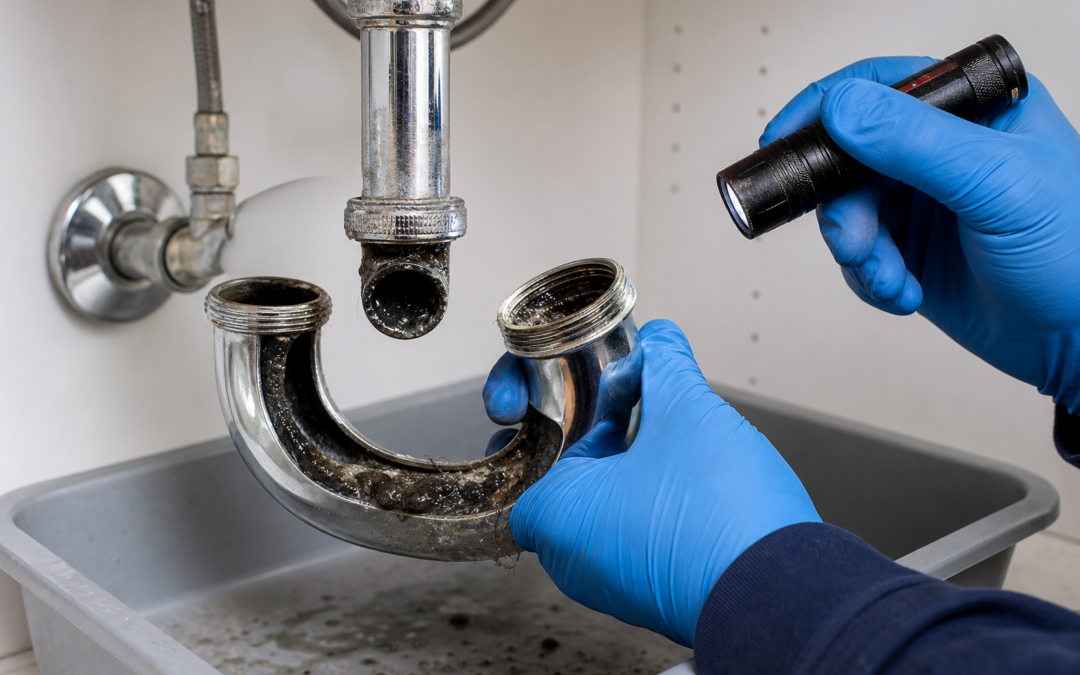
Black sludge in a bathroom sink drain is commonly a moist buildup of soap, toothpaste, skin oils, hair, dust, and microorganisms that form a sticky biofilm. It often collects on the stopper, inside the drain tailpiece, around the overflow passage, or in the P-trap because those areas stay damp and catch residue.
Color alone cannot confirm exactly what the material is. Dark residue can also include mineral deposits, corrosion products, degrading rubber, or debris held in standing water. If it keeps returning, smells bad, accompanies slow drainage, or appears near a leak, the drain should be inspected instead of treated as a cosmetic stain.
Why the Residue Turns Dark and Sticky
Everyday bathroom use sends more than water down the sink. Toothpaste, soap, shaving products, skin oils, hair, and fine debris cling to wet surfaces inside the drain. Microorganisms naturally present in the environment can grow within that organic film. As layers collect and trap more material, the buildup can become gray, brown, or black and develop a slick or stringy texture.
The residue is often most visible when the stopper is lifted or removed. A pop-up stopper has surfaces and small gaps that catch hair and paste. The vertical tailpiece beneath it can hold a coating even while water still passes. The P-trap intentionally retains water, so material that settles in the bend remains wet between uses.
That does not mean every dark deposit is the same. A plumber may need to look at where the material appears, how the sink drains, whether an odor is present, and whether any component is deteriorating before identifying the likely source.
Surface Buildup or a Deeper Drain Problem?
A small amount of residue on an accessible stopper can sometimes be removed during ordinary sink cleaning. The more important question is what happens afterward. If the stopper remains clean, water drains normally, and no odor or moisture returns, the deposit may have been limited to the exposed fitting.
Repeated accumulation suggests that residue remains farther inside the drain. Water moving through a narrowed or roughened passage can leave more material behind. Hair may form a framework that catches soap and toothpaste. A partially obstructed P-trap can hold dirty water longer, while buildup in the tailpiece can continue coating the stopper from below.
Watch for conditions that point beyond simple surface cleaning:
- Water drains more slowly than it used to.
- The basin empties with gurgling or bubbling sounds.
- A musty, sour, or sewer-like odor returns after cleaning.
- Black residue reappears quickly on the stopper or at the drain opening.
- Water stands in the basin or rises around the stopper.
- Moisture, staining, or corrosion appears beneath the sink.
- More than one nearby fixture begins draining poorly.
These signs do not prove one specific defect. They give the plumber useful context for deciding whether the sink needs routine drain cleaning, a fitting repair, or a wider drainage evaluation.
When the Material May Come From a Component
Some dark material is not ordinary organic buildup. A deteriorating rubber washer, gasket, or stopper seal can shed black particles. Corrosion or old plated metal can contribute dark flakes or staining. A leaking joint may keep cabinet surfaces damp and create residue outside the pipe rather than inside the flowing drain.
Location helps separate these possibilities. Slime coating the wet interior of the stopper and trap is different from dry rubber fragments, metallic flakes, or black staining around a joint. Do not keep tightening a connection or forcing a stopper based on appearance alone. Excess force can damage a fitting, disturb a seal, or turn a slow seep into an active leak.
If the drain assembly is loose, cracked, corroded, or wet underneath, bathroom plumbing service may need to address the affected component as well as the buildup. Cleaning residue without correcting a leaking or deteriorated part will not remove the source.
Safe Steps to Take Right Away
Start by noting where the material is visible and whether the sink is draining normally. Remove toiletries and stored items from beneath the sink so a slow leak is easier to spot. Dry the cabinet floor, drain connections, and supply area, then check whether moisture returns during ordinary faucet use.
Accessible residue on the basin or exposed stopper can be wiped away with normal household cleaning precautions. Avoid pushing material deeper into the drain. Do not mix drain products, pour caustic chemicals into standing water, or follow one cleaner with another. Chemical reactions can release hazardous fumes, damage components, and create a more dangerous service condition.
Boiling water is not a universal solution. It can soften or stress some piping and seals, and it does not remove every type of obstruction. Forcing a stuck stopper, opening a trap without a plan for retained water, or inserting an unsuitable tool can also cause damage or a spill.
Stop using the sink and arrange service if water is leaking into the cabinet, a fitting appears damaged, or drainage has stopped. If only this sink is affected and no leak is present, limit use and describe the residue, odor, and drainage behavior when scheduling the inspection.
What Professional Drain Cleaning Can Address
A plumber first determines whether the problem is confined to the stopper and trap or continues into the branch drain. The inspection may include checking the stopper mechanism, tailpiece, trap, wall connection, visible seals, and drainage rate. If the trap is opened, retained water and debris can be contained while the component is examined for damage.
The cleaning method depends on what is found and where it sits. Hair and soft organic buildup near the fixture may require a different approach from a compacted obstruction farther down the branch. The plumber can also determine whether a component should be cleaned, resealed, or replaced rather than assuming every black deposit is just a clog.
After the work, the sink should be tested under normal flow. The drain rate, joints, trap, and stopper operation can be checked while the cabinet remains accessible. If symptoms suggest damage or a recurring problem beyond ordinary buildup, drain repair or further inspection may be discussed based on the evidence.
Professional cleaning does not guarantee that residue will never form again. Bathroom drains continue receiving soap, hair, and other material. The goal is to clear the current restriction or buildup, confirm that the visible assembly is sound, and explain any condition that needs separate repair.
Reducing Future Buildup
Routine habits can reduce how quickly residue collects. Keep loose hair from entering the sink, wipe heavy shaving cream or cosmetic residue from the basin before rinsing, and use only the amount of toothpaste or product needed. Clean the accessible stopper surface before a thick layer forms.
Pay attention to changes in drainage instead of waiting for a complete stoppage. A sink that slowly takes longer to empty may be developing a restriction even if it still works. Early service can be simpler than dealing with standing water, a trapped odor, or a connection disturbed during an urgent clearing attempt.
Repeated sludge should not be hidden with fragrance or treated indefinitely with chemicals. If ordinary surface cleaning does not last, the useful next step is to find where material is being retained and whether the drain assembly is functioning correctly.
Schedule a Bathroom Sink Drain Evaluation
If black sludge keeps returning in a bathroom sink at your Cypress home, or the drain is slow, odorous, leaking, or difficult to clear, contact Champion Plumbing Services. The team can inspect the sink drain, explain what the visible condition suggests, and recommend cleaning or repair based on the plumbing that is actually affected.