
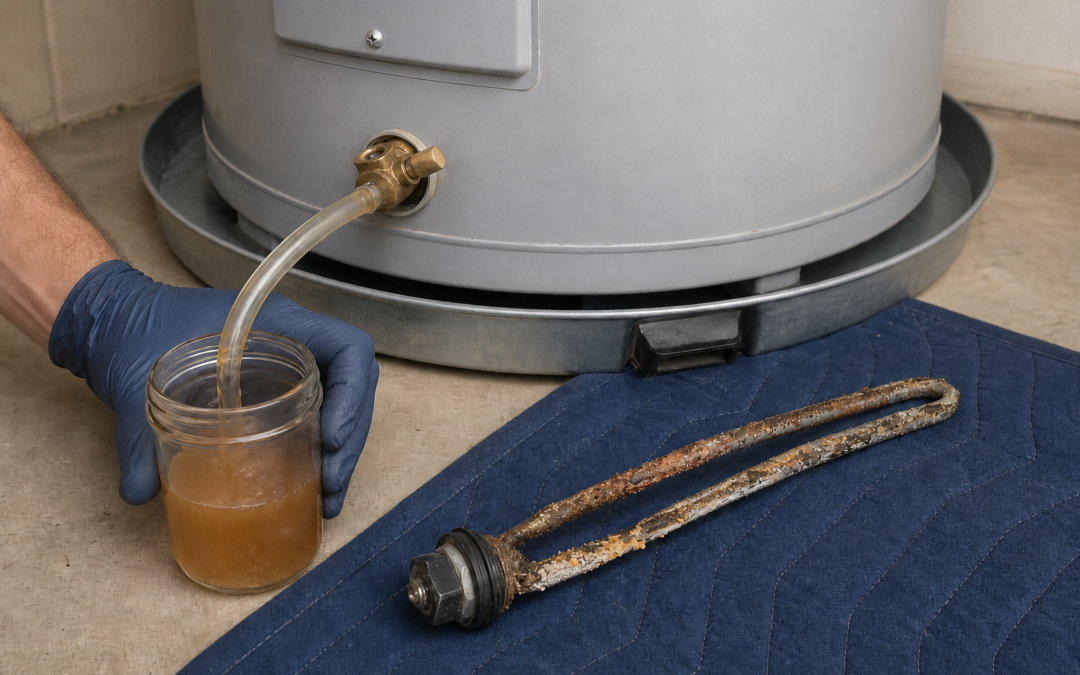
When hot water looks brown or rusty but cold water remains clear, the water heater or the home’s hot-water piping becomes the more likely source. Sediment inside a storage tank, a deteriorating anode or heating component, and internal corrosion can create similar colors, so appearance alone cannot show whether the heater needs cleaning, repair, or replacement.
The hot-versus-cold pattern gives a plumber a useful starting point. If both sides are discolored, the incoming water supply or a broader plumbing condition deserves attention. If only one faucet is affected, the problem may be limited to that fixture or a nearby branch line. Comparing those patterns safely can prevent an unnecessary heater replacement.
Compare Hot and Cold Water at More Than One Fixture
Use a clean, clear container to observe the water without opening or draining the heater. At one faucet, collect cold water first and let the container sit where the color and particles are easy to see. Use a second clean container for hot water. Repeat the comparison at another fixture served by a different hot-water branch.
Record what you observe:
- Is the cold sample clear at both fixtures?
- Does the hot sample look brown, orange, yellow, or cloudy?
- Do particles settle at the bottom after the sample stands?
- Does the discoloration appear immediately or only after hot water runs for a while?
- Is one fixture worse than the others?
- Did the change begin after plumbing work, a utility interruption, or a period when the heater was not used?
Do not taste visibly discolored water to identify it. If hot and cold water are both affected, contact the water utility or an appropriate water-quality professional as well as a plumber, because the source may be upstream of the heater.
Sediment Can Collect Inside a Storage Water Heater
Minerals and small particles can settle at the bottom of a storage tank. Normal heating and water movement may stir that material into the hot-water outlet, especially after a change in use or a disturbance inside the tank. The result can be cloudy or tinted hot water with particles that settle in a container.
Sediment does not automatically mean the tank must be replaced. Its amount, the heater’s condition, the drain-valve sample, and other symptoms all matter. A plumber may determine that controlled service is appropriate, or the inspection may show that corrosion or deterioration has progressed beyond a maintenance correction.
Homeowners should not use the drain valve as a do-it-yourself test. A storage heater contains hot water under pressure and may involve gas, venting, or high-voltage electrical components. An old drain valve can also leak or fail to reseal after it is operated.
Anode Wear and Corroded Components Can Look Similar
Many storage water heaters use a sacrificial anode rod to protect the steel tank. The rod is designed to deteriorate over time instead of the tank. Its condition, the water chemistry, and the heater design can affect the debris or discoloration a plumber finds during an inspection.
Electric heaters also contain heating elements that remain in contact with the water. Scale and corrosion around an element or its opening can add another possible source of particles. Gas and electric heaters have different components, so the diagnosis must match the exact equipment.
An anode rod or heating element should not be removed while the heater is pressurized or energized. Safe access may require shutting down the fuel or power source, isolating water, allowing the equipment to cool, relieving pressure, and confirming that the component can be removed without damaging the tank.
Internal Tank Corrosion Needs a Careful Inspection
Brown hot water can sometimes indicate corrosion inside the heater. A plumber will look for more than color before recommending replacement. Visible rust around fittings, moisture in the drain pan, water at the base, metallic flakes, a corroded drain connection, or repeated discoloration after appropriate service can change the decision.
Tank deterioration is different from loose sediment. A tank that is leaking through its body generally cannot be repaired like a replaceable valve or element. The challenge is confirming where moisture and debris originate rather than assuming every rusty-looking sample proves the tank shell has failed.
The heater’s service history, installation condition, and access also matter. Two heaters can produce similar-looking water for different reasons, and one may have a serviceable component while the other shows broader deterioration.
When Both Hot and Cold Water Turn Brown
If cold water is also brown at several fixtures, the heater is less likely to be the only source. Utility work, hydrant use, a change in the public supply, private-well conditions, or corrosion in the incoming water line can affect both sides of the plumbing.
Run only the limited comparison needed to document the pattern. Avoid repeatedly sending discolored water through appliances, filters, ice makers, or the heater while the source is uncertain. Ask the utility whether there is a known disturbance, and tell the plumber which fixtures and water temperatures are affected.
A single discolored fixture points in another direction. Rust or debris can come from the faucet, supply connector, shutoff valve, or a short section of branch piping. Comparing a second fixture helps separate that local condition from the heater and main supply.
What a Plumber Checks at the Water Heater
A useful inspection connects the water pattern to the equipment condition. Depending on the heater and what can be accessed safely, a plumber may:
- Compare hot and cold samples at multiple fixtures.
- Draw a controlled sample from the heater’s drain connection.
- Check whether particles settle and whether the color changes as the sample stands.
- Inspect the tank body, drain pan, valves, connectors, and visible fittings for moisture or corrosion.
- Review recent utility or plumbing work and the heater’s maintenance history.
- Inspect an anode rod or heating element when the heater can be safely shut down, isolated, cooled, and depressurized.
- Look for unusual noise, loss of hot-water capacity, leaks, or other symptoms that affect the repair decision.
The observed source determines the next step. Controlled service may be reasonable when sediment is the main condition and the tank remains sound. A replaceable valve, element, or compatible anode may be involved in another case. If the tank body is deteriorated or leaking, replacement may be the reliable path. If both hot and cold water are affected, work may need to focus on the supply rather than the heater.
Do Not Treat Discolored Water With a Guess
Draining or flushing a heater without checking its condition can create a leak at a worn drain valve or stir more material into the system. Removing the anode without understanding its protective role can shorten the tank’s service life. Adding a filter will not repair a corroded tank, and replacing a heater will not fix discoloration coming from the incoming supply.
Avoid pouring cleaners or chemicals into the heater, changing temperature controls, opening element covers, or loosening tank fittings. Those steps can create pressure, burn, electrical, gas, equipment-damage, or water-quality risks.
The safest direction is to document the hot-versus-cold pattern and let the inspection determine which component or water source needs attention.
When to Schedule Service Promptly
Arrange prompt water-heater service when discoloration returns repeatedly, becomes darker, or appears with metallic debris, popping or rumbling, reduced hot-water capacity, or visible corrosion. Moisture around the tank, water in the drain pan, or an active leak at a connection also needs attention.
If the tank or a nearby fitting is actively leaking, stop using hot water when it is safe to do so and request urgent plumbing help. Keep clear of water near electrical equipment. Use the home’s water shutoff or the heater’s isolation valve only when it can be reached and operated safely.
Even when no leak is visible, a hot-only brown-water pattern deserves diagnosis before a replacement is ordered. The comparison can show whether the heater, one branch line, or the incoming supply should be investigated first.
Get Brown Hot Water Checked in Cypress
Clear cold water and brown hot water narrow the search, but they do not name the failed part. A controlled sample and equipment inspection can distinguish sediment, component wear, tank deterioration, and a localized hot-water piping condition.
If your Cypress home’s hot water is brown or rusty, contact Champion Plumbing Services. The team can inspect the water heater and related plumbing, explain what the evidence shows, and recommend service or replacement only after the source is confirmed.