
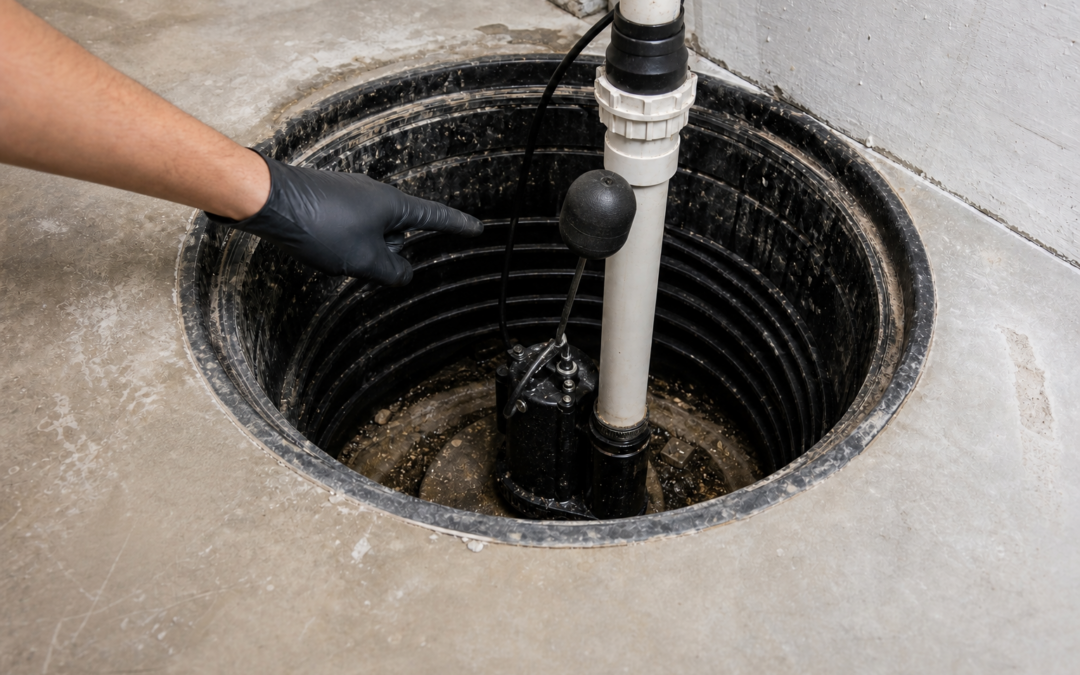
A sump pump that keeps running after the pit appears empty usually has a float or switch that is still calling for the pump to run, water returning through the discharge pipe, or continuing inflow that is hard to see. Less often, the pump or basin is mismatched for the amount of water entering. Continuous running can overheat the motor and leave the home unprotected when the next surge of water reaches the pit.
Do not reach into the basin, move the float by hand, touch a wet plug, or bypass the switch. If the pit is filling, water is spreading beyond the basin, or electrical equipment is wet, keep away and call for help. A plumber can separate a mechanical float problem from a discharge or drainage problem without creating another electrical or flooding risk.
A Low Water Level Does Not Always Mean the Pump Should Stop
Most sump pumps start and stop according to a float, pressure sensor, or electronic level control. As water rises, the control calls for the pump to run. When the water falls to the shutoff level, the control should release and the motor should stop.
The visible water line can sit below the top of the pump while the switch remains engaged. A tethered float may be caught against the basin wall or discharge pipe. A vertical float may bind on its guide. An electronic sensor may be coated or failing. Water may also be returning from the discharge line fast enough to keep retriggering the system.
A brief sound after the water level drops can be normal for some systems. A motor that runs continuously for minutes after normal inflow ends, becomes unusually hot or loud, or repeatedly runs without moving water needs evaluation.
The Float May Be Trapped in the Run Position
The float needs clear room to travel through its full range. A tether can wrap around the pump, press against the basin wall, or rest on the discharge pipe. A vertical float can collect debris or shift out of alignment. If the float cannot fall to its shutoff point, the pump keeps receiving a run signal even when little water remains.
Clues that can support a float-related diagnosis include:
- The pump began running continuously after the basin cover, pump, or discharge pipe was moved.
- The float appears high even though the water level is low.
- The motor runs steadily rather than starting and stopping every few seconds.
- No water seems to leave the discharge outlet while the motor continues.
Observe only from a dry, safe position. Do not remove the cover if doing so brings your hands near wet wiring or energized equipment. Do not push the float down with a tool. The pump can start unexpectedly, and forcing a bound float may damage the switch or cord.
The Switch or Controller Can Fail Even When the Float Moves
Mechanical float switches contain contacts that open and close over many cycles. Those contacts can stick in the on position. A relay or controller can also fail, and an electronic level sensor may misread moisture, debris, or condensation as a high water level.
The visible float position alone does not prove the switch is working. A float can drop normally while failed contacts continue supplying power to the motor. A plumber may test the control separately, check the pump’s operating current, and confirm whether the switch opens at the correct level.
Never bypass the switch or connect the pump directly to power as a home test. Bypassing a safety control can make the motor run continuously and removes the automatic response the system depends on.
Water May Be Returning Through the Discharge Pipe
The check valve in the discharge line is intended to keep pumped water from flowing back into the basin when the motor stops. If the valve is missing, installed incorrectly, stuck open, or damaged, water held in the vertical pipe can drain back into the pit. The falling water level turns the pump off, the returning water raises it again, and the cycle repeats.
This condition often sounds different from a true continuous run. You may hear the pump stop, a rush or thump in the discharge pipe, and the motor start again shortly afterward. A small amount of water returning can be normal depending on the installation, but repeated refill from the discharge line wastes energy and increases wear.
A blocked, frozen, crushed, or poorly routed discharge line can create another problem: the motor runs but cannot move enough water away from the home. Water may swirl in the basin, leave slowly, or return through a leak or loose connection. Sump pump service can check the pump, float, valve, and discharge path as one system.
Continuing Inflow Can Be Hard to See
After heavy rain or a rise in groundwater, water may enter through small openings around the basin faster than it is obvious from above. The pump can lower the visible level while a steady stream continues beneath the surface or behind the liner. In that situation, the pump may be responding correctly even though the pit looks nearly empty.
Listen for water entering the basin and note whether the run time changes as outdoor conditions improve. Do not assume the pump is faulty just because it runs for a long period during active inflow. Turning off a functioning pump while water is still entering can allow the basin to overflow.
If the water level rises despite continuous operation, stay away from wet electrical equipment and request prompt help. Emergency plumbing may be appropriate when water is escaping the pit or threatening finished areas.
Pump Size, Basin Size, and Installation Height Matter
A pump can run too long if it is undersized for the inflow, worn enough to have lost capacity, or trying to push water through a discharge route with too much resistance. A very small basin can also create poor operating patterns because the water level changes rapidly and the float has limited travel.
Installation height matters as well. If the shutoff point sits below the practical drawdown level, the pump may continue trying to remove water that naturally remains around the intake. An incorrectly positioned float may call for a lower level than the pump can achieve.
These conditions are evaluated together. Replacing the pump without checking the basin, float range, check valve, and discharge route can leave the same operating problem in place.
Continuous Running and Short Cycling Are Different Problems
Continuous running means the motor stays on without a meaningful stop. Short cycling means the motor starts and stops too frequently. Both increase wear, but they point toward different test priorities.
Short cycling often involves returning discharge water, a small basin, a narrow float range, or fast inflow. Continuous running more often directs attention to a trapped float, failed switch, blocked discharge, lost pumping capacity, or ongoing water entry. A system can show both patterns at different times, especially when a check-valve problem combines with a sticky float.
Record what you hear instead of repeatedly testing the pump. The order of sounds—steady motor, stop, water return, restart—can help a technician reproduce the fault safely.
Safe Details to Record Before Service
Useful observations do not require touching the equipment:
- Whether the motor runs steadily or stops and restarts.
- Whether the visible water level is falling, stable, or rising.
- Whether water appears to move through the discharge pipe.
- Whether you hear a thump, gurgle, or water rushing back after shutdown.
- Whether the float appears caught against the wall, cover, or pipe.
- Whether the problem began after recent pump, cover, or discharge work.
- Whether rain or groundwater conditions changed before the problem started.
- Whether water is escaping the basin or reaching electrical equipment.
Take a short video from a dry location if it can be done without approaching the pit. Do not remove panels, open electrical boxes, disconnect wiring, or place a meter on the circuit yourself.
What a Plumber Checks
A controlled diagnosis starts with the operating pattern and water level. Depending on the installation, the plumber may:
- Confirm that the float moves freely and reaches its shutoff position.
- Test the switch, controller, or sensor without bypassing its safety function.
- Check whether the pump is moving the expected amount of water.
- Inspect the check valve, union, and visible discharge connections.
- Look for a blocked, restricted, leaking, or poorly routed discharge line.
- Compare active inflow with the pump and basin capacity.
- Check whether the float range and pump height suit the basin.
If the discharge problem connects to a broader drainage failure, drain repair may be part of the recommendation. The right correction may be a float adjustment, switch replacement, check-valve repair, discharge correction, pump replacement, or an installation change. The test results should determine the repair rather than the motor’s sound alone.
Get a Continuously Running Sump Pump Checked
If your sump pump keeps running after the pit appears empty, contact Champion Plumbing Services for a sump-pump evaluation in the Cypress area. Checking the float, switch, valve, discharge route, inflow, and basin setup can identify why the motor is not stopping and help restore dependable operation before the next high-water event.