
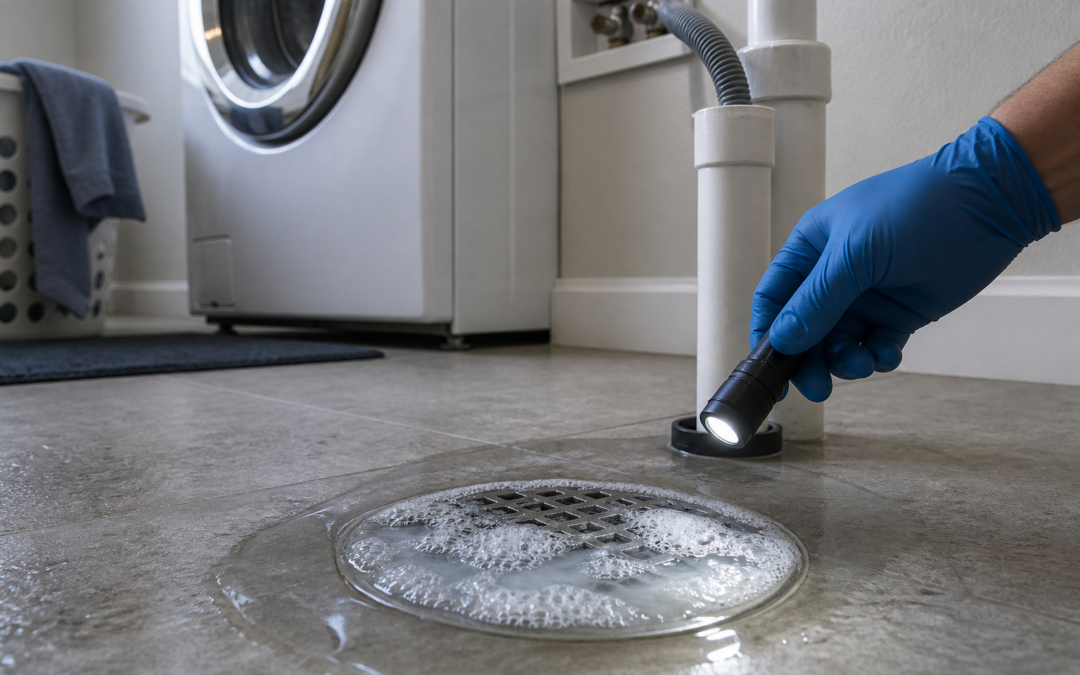
Water or soap foam rising from a floor drain while the washing machine empties usually means the appliance is sending water into a drain path that cannot carry the full discharge normally. The washer standpipe and floor drain may connect to the same branch farther downstream, allowing backed-up water to appear at the lower opening. A local clog is one possibility, but pipe layout, buildup, a damaged section, or a wider drainage problem can create a similar pattern. The visible floor drain does not identify the exact cause by itself.
Stop the washing machine if it is safe to do so, and do not start another drain cycle to test the symptom. Keep people and pets away from the wet area. Avoid touching the water, especially if it is gray, foul-smelling, or contains debris. Do not operate plugs, cords, or appliance controls while standing on a wet floor.
The Washer and Floor Drain May Share a Downstream Path
A washing machine normally pumps used water through a discharge hose into a vertical standpipe. The standpipe connects to a trapped and vented drain line. A nearby floor drain has its own grate and trap, but the two drains may join a common branch before that branch reaches a larger building drain.
When the shared section is open, washer water moves away without affecting the floor drain. If the downstream path is narrowed, the pump may deliver water faster than the pipe can carry it. The temporary pressure and rising water level can push water toward another low opening. In a utility room or garage, that opening may be the floor drain.
The arrangement varies from one home to another. Two drains that sit close together do not always share the first branch, and drains in different rooms may connect sooner than expected. A plumber needs to identify the actual route before choosing an access point or naming the affected section.
A Washer Cycle Can Reveal a Partial Restriction
Small flows from a sink may pass through a narrowed pipe without an obvious symptom. A washing machine releases a concentrated volume during the drain portion of its cycle. That larger flow can expose a restriction that remains hidden during lighter use.
The timing is useful. If the floor drain remains still while the washer fills and begins rising only when the pump starts, the discharge is likely part of the pattern. If water appears long after the appliance stops, continues rising while no fixtures run, or returns during unrelated water use, the problem may extend beyond one appliance connection.
Do not recreate the event for a video. Record what you already observed: where the washer was in its cycle, how quickly the floor drain rose, whether water reached the floor, and how long it took to recede after the appliance stopped.
Note Which Other Fixtures Join the Pattern
The number and location of affected fixtures help separate a local branch problem from a wider drainage concern.
A symptom limited to the laundry area may point toward the washer standpipe connection, floor-drain branch, or a shared section serving that room. If a nearby sink also drains slowly, the connection may be downstream of both fixtures. If toilets bubble, tubs receive wastewater, several drains slow at once, or an outdoor cleanout releases water, the restriction may involve a larger building drain or sewer path.
Those patterns are clues, not a diagnosis. One low fixture can show a backup before higher fixtures react. A floor drain can also retain old residue or trap water that changes the appearance of what rises. Professional drain cleaning starts with the affected path and the observed flow pattern instead of assuming every laundry-area backup has the same cause.
Floor-Drain Water Can Look Different From the Washer Discharge
Clear water with light soap foam may resemble the current laundry load, but appearance alone cannot show where the restriction sits. Gray water can mix with residue already in the floor-drain trap. Dark particles may come from accumulated material in the branch. A sewage odor or toilet paper raises concern about a wider wastewater backup, but even then, the source and boundary need to be inspected.
Tell the plumber whether you noticed:
- Clear, cloudy, gray, or dark water.
- White laundry foam, grease, sediment, paper, or other visible material.
- A sewer-like, musty, detergent, or otherwise unusual odor.
- Gurgling at the floor drain, standpipe, sink, tub, or toilet.
- A water level that falls quickly, drains slowly, or remains standing.
- The same symptom during previous washer cycles.
- Recent heavy rain or a similar event during dry weather.
Rain timing can be relevant in Cypress, but an event after rain does not prove stormwater entry, a public sewer problem, or a damaged underground line. Soil conditions, pipe defects, household water use, and an unrelated blockage can overlap in time. The line still needs direct evaluation.
Standpipe Overflow Is a Different Visible Symptom
If water spills over the top of the washer standpipe, the immediate visible problem is at the appliance drain connection. A standpipe that is too short, improperly sized, poorly connected, or restricted can contribute to overflow. A loose discharge hose can also release water onto the floor without the floor drain backing up.
When water rises through the floor-drain grate, the lower drain opening is responding to conditions within its own trap or a connected downstream path. Both symptoms can happen during the same cycle, but they should not be treated as interchangeable. Describe whether water came from the standpipe, the floor drain, a hose connection, or more than one location.
Do not pull the washer away from the wall while the floor is wet or the appliance remains connected to power. A plumber can inspect the visible discharge setup after the area is safe and compare it with the floor-drain response.
Stop Water Use and Avoid Improvised Clearing
Pause laundry until the drain is evaluated. If other fixtures make the floor drain rise, reduce household water use as well. A repeated washer cycle can send another concentrated volume toward a restricted branch and spread water farther across the floor.
Avoid these actions:
- Do not remove the floor-drain grate or reach into backed-up water.
- Do not pour chemical drain cleaner, bleach, acid, enzymes, or boiling water into the floor drain or standpipe.
- Do not mix products or add a second treatment if one was already used.
- Do not insert a rented cable, rod, hose, pressure nozzle, or improvised tool.
- Do not open an indoor or outdoor cleanout while the line may be holding water.
- Do not keep running faucets or flushing toilets to find out whether the problem is getting worse.
- Do not use a wet vacuum to move potentially contaminated water without a safe disposal plan.
If a product or tool has already entered the drain, tell the plumber exactly what was used. That detail affects how the pipe can be opened and handled safely.
What a Professional Drain Evaluation Checks
The first step is to confirm where water appeared and which discharge triggered it. A plumber can inspect the floor drain, washer standpipe, accessible traps and connections, nearby fixtures, and any suitable cleanout. The observed water level and drainage pattern help identify a safe access point.
Depending on the layout and findings, service may include:
- Confirming whether the floor drain and standpipe share a branch.
- Checking for retained water, accessible buildup, or a damaged grate, trap, or connection.
- Selecting cleaning equipment appropriate for the pipe size, material, and access.
- Clearing a confirmed restriction without forcing debris into another branch.
- Testing a controlled water volume after flow is restored.
- Inspecting nearby fixtures for gurgling, slow drainage, or cross-fixture movement.
- Recommending a sewer camera inspection when repeated backups or broader symptoms suggest that a useful view of the downstream pipe could change the repair decision.
A camera may not provide a clear view through standing, opaque water or loose debris. Restoring controlled flow can be necessary before the pipe wall and joints are visible. The useful question is not merely whether the line opened, but why the restriction formed and whether the condition is likely to return.
Cleaning and Repair Solve Different Conditions
Cleaning may restore flow when accumulated material is restricting an otherwise usable pipe. It cannot correct a collapsed section, separated joint, severe offset, failed fitting, or pipe that no longer holds a workable slope.
Drain repair becomes part of the discussion when inspection finds physical damage, repeated obstruction at the same defect, a failed connection, or another condition that cleaning cannot remove. The repair scope should follow the exact location and extent of the finding. A laundry-area symptom does not justify opening floors or replacing pipe until the route and defect are confirmed.
After service, the washer discharge and floor drain should be tested with a controlled volume appropriate to the system. The floor-drain water level should remain stable, the standpipe should accept the discharge without overflowing, and nearby fixtures should not gurgle or rise. Any remaining limitation should be explained before normal laundry use resumes.
Schedule a Floor-Drain Evaluation in Cypress
If your floor drain rises when the washing machine empties, stop the appliance and avoid adding more water to the affected drain path. Contact Champion Plumbing Services for a focused drain evaluation in Cypress. The team can trace the washer and floor-drain connections, clear an appropriate restriction when possible, and explain whether repeated symptoms or pipe findings call for camera inspection or repair.